Design finance systems by stage to support growth. Learn practical approaches to building finance that scales with your business.
As a company scales, operations usually accelerate faster than the systems that explain them. Sales expands, delivery becomes more complex, clients expect more while finance continues operating on a system built for an earlier stage.
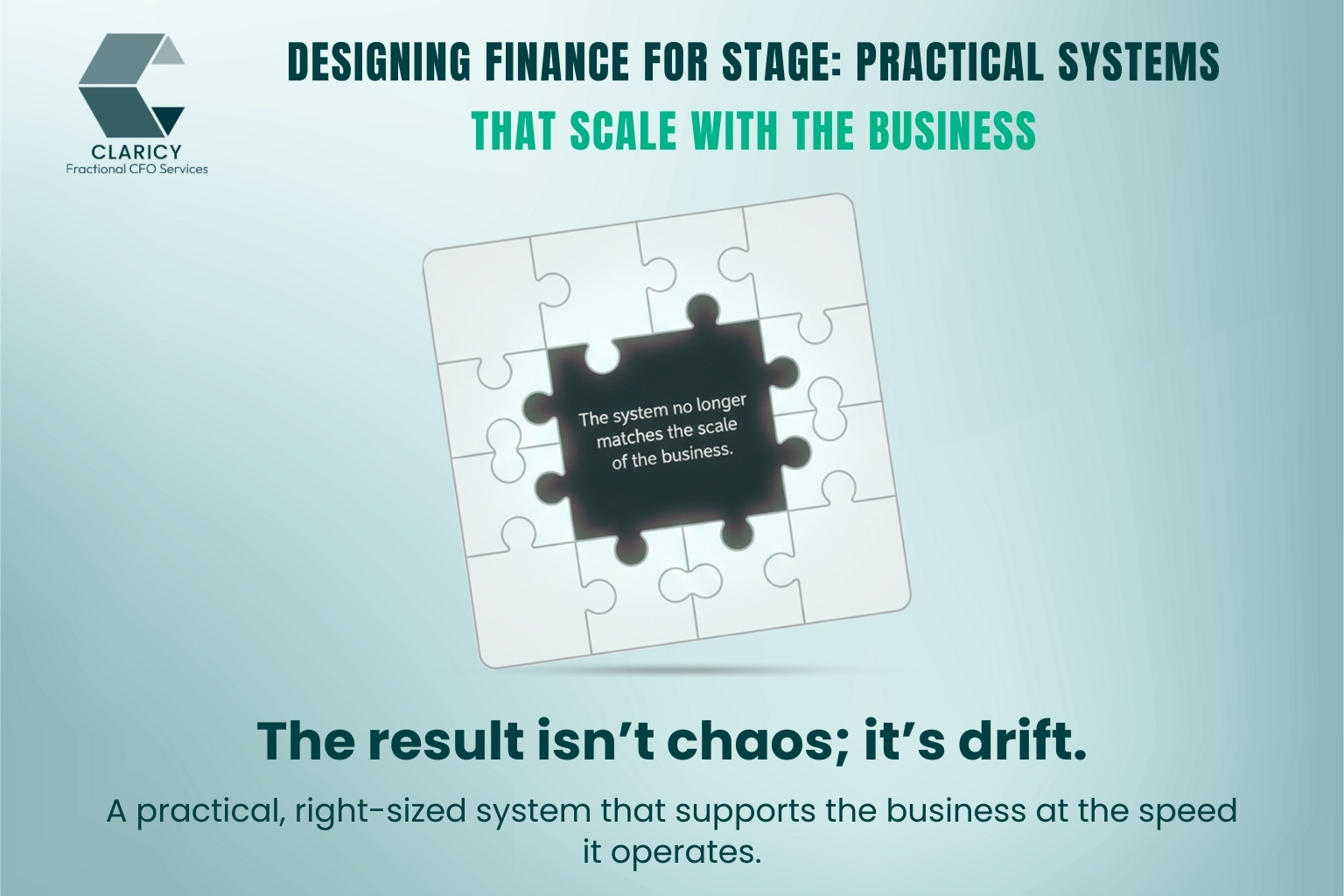
The result isn't chaos; it's drift.
You see it in finance early:
Information lags behind the work.
Teams debate numbers instead of acting on them.
Margin and cash questions take longer because inputs arrive late or inconsistently.
And leaders end up reacting later, with half the picture.
This isn't a competence issue. It's a design issue. The system no longer matches the scale of the business.
Good design doesn't start with software. It starts with a CFO-level question: "What system do we need to ensure the right in formation reaches the right people at the right time?"
From there, the steps become clearer.
1. Decisions first A growth-stage finance system must support capacity planning, margin clarity, investment choices, cash and risk, and accountability by product, client, or segment. If the system struggles here, the structure not the e f fort - is the constraint.
2. Design the flow The issue isn't the accounting system; it's that information flow hasn't kept pace with the business. A practical approach makes clear what must be captured, where it originates, who owns it, and how it moves to the people who need it. Without this, even routine questions take too long to answer. With it, insight becomes part of the regular rhythm.
3. Layer the roles Most SMBs don't have a full-time CFO and don't need one. What they do need is CFO-level structure long before they need the role.
Without that structure, the senior finance person of ten absorbs everything: reporting, gaps, budgeting, system fixes, analysis, and strategic questions.
A right-sized model creates layers:
Operational finance keeps the record accurate and
stable.
Finance coordination maintains information flow.
CFO-level guidance designs the system and connects it to strategy.
When these layers don't exist, finance stays reactive.
When they're de fined, the organization gains clarity and leverage.
4. Tech follows structure Stabilize the data model before automating it. Build repeatable processes before scaling them.
Choose tools that support the next few years, not a distant ideal state.
5. Build an Al-ready system AI can extend a solid
finance system; it cannot fix one without structure. Once the foundation is stable, Al accelerates scenarios, checks, commentary, and forecasts - but only when flows are consistent and trusted.
When finance is designed intentionally, leaders share one version of the truth, and decisions are made early, with a full picture.
That's what designing finance for stage is really about: A practical, right-sized system that supports the business at the speed it operates.