A practical, scalable system for smarter decisions, discipline, and growth.
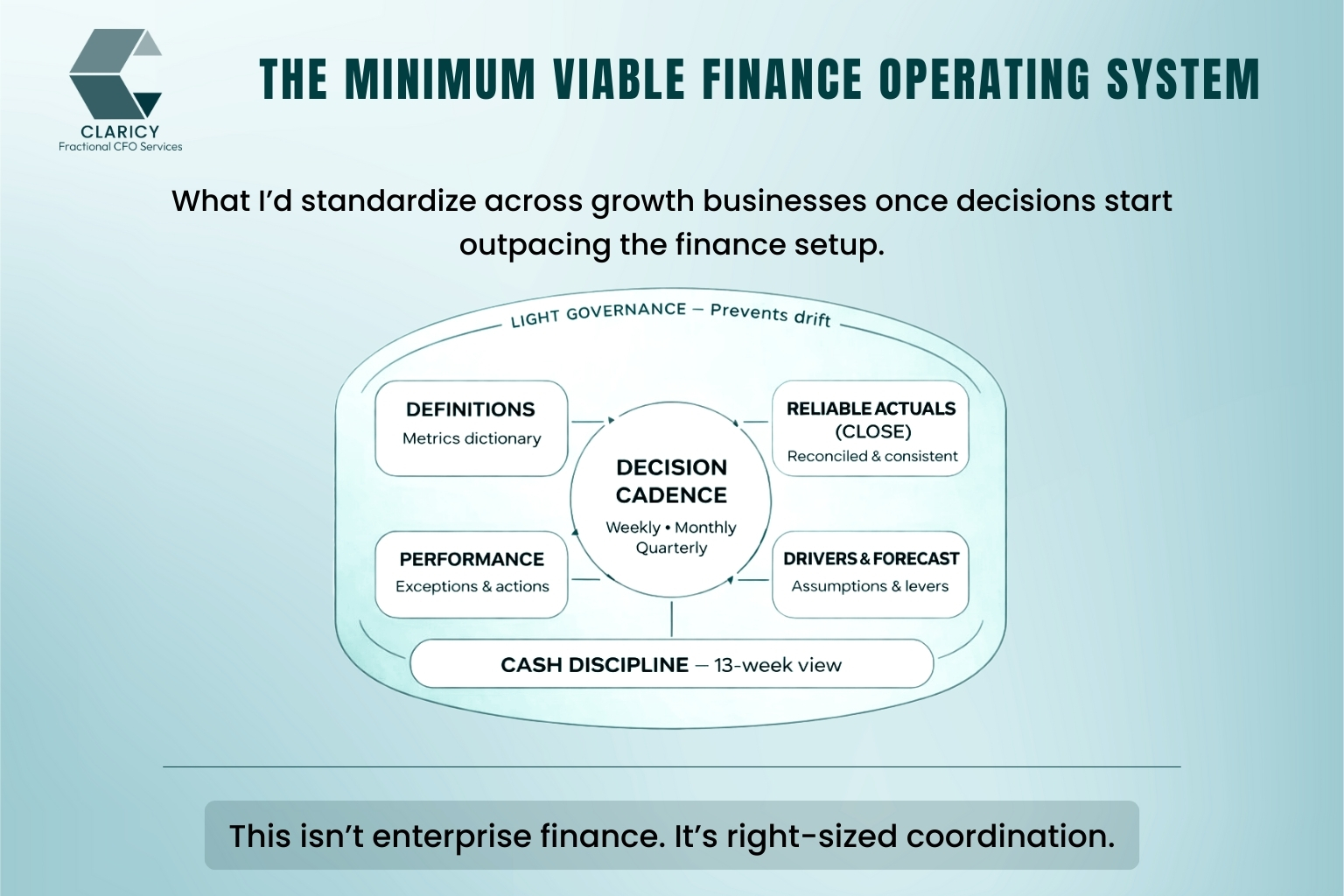
At a certain stage, the business is no longer “hard” because people aren’t working.
It’s hard because the company has outgrown informal coordination.
Numbers show up late. Meanings change meeting to meeting. Cash feels lesspredictable than it should.
Put this in place and three things change quickly: forecasting becomes anassumptions conversation, hiring becomes a controlled choice, and cashsurprises become rarer.
1. Decision cadence and named owners: Weekly cash and exceptions. Monthlyresults and drivers. Quarterly capacity choices. Decisions logged. Actions owned.
2. A shared metrics dictionary: A one-page language for the few metrics you runon: definition, formula, source, owner, frequency.
3. Financial structure that matches how you operate: A chart of accounts andlight tagging that separates delivery costs from overhead and keeps lines ofbusiness visible.
4. A close leadership can trust: Reconciled, consistent, explainable. Fastenough to steer without second-guessing.
5. A driver model (not a spreadsheet exercise): Tie outcomes to levers you canactually manage: volume, price/mix, capacity, and timing.
6. A rolling 13-week cash view: Updated weekly from receivables, payables,payroll, and commitments. Used to make trade-offs early.
7. One-page exception reporting: What changed, why it changed, what decision itrequires, and who owns the next step.
8. Light governance so the system doesn’t drift: Rules for definitions, newoffers, coding, and reporting changes before they distort the income statement.
This isn’t enterprise finance. It’s right-sized coordination, so smart teamsstop debating the numbers and start using them.
Across this series, the pattern is consistent: finance doesn’t scale by tryingharder. It scales by being designed across people, process, and technology.